Previously published
The Society publishes the Suffolk Natural History series of books. These excellent hardback reference works provide a wealth of information about the history, status and biology of Suffolk’s wildlife. With their high-quality photographs, accurate distribution maps and authoritative text, they are essential reading for anyone interested in Suffolk’s flora and fauna. In addition, the society sponsored A Celebration of Suffolk Geology.
The following books are regrettably out of print, but you may be able to find them secondhand.
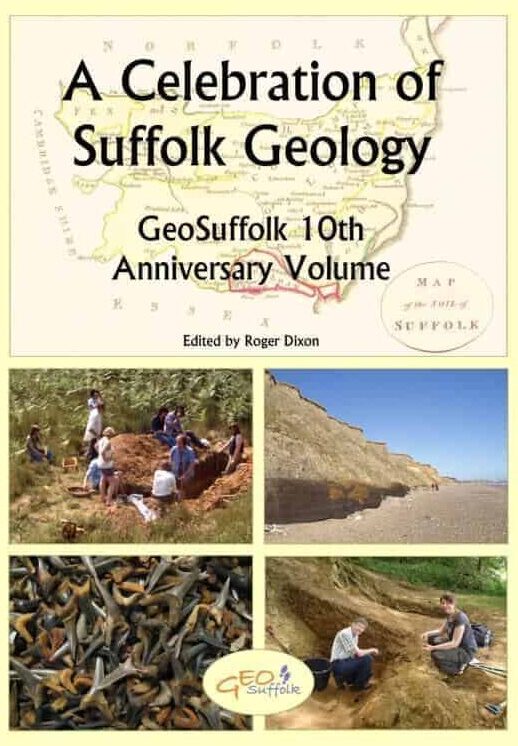
A Celebration of Suffolk Geology:
GeoSuffolk’s 10th Anniversary Volume
Authors: edited by Dr Roger Dixon
Published by GeoSuffolk, Ipswich, 2012
Full colour, hardback, 460 pp.
ISBN 0-9508154-7-0
GeoSuffolk’s 10th Anniversary volume, ‘A Celebration of Suffolk Geology‘, was published in 2012. With over 460 pages and over 40 authors, it has encouraged a variety of research topics on the geodiversity of Suffolk and contains a series of well-illustrated papers on aspects of the County’s geology.
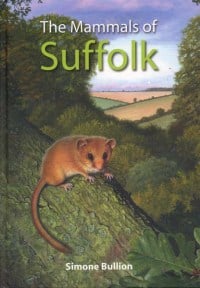
The Mammals of Suffolk
Author: Simone Bullion
Published jointly by Suffolk Naturalists’ Society and Suffolk Wildlife Trust, Ipswich, 2009
Full colour, hardback, 207 pp.
Size 176 × 250 mm (B5)
The county’s first comprehensive account of Suffolk’s mammals is jointly published by Suffolk Naturalists’ Society and Suffolk Wildlife Trust. The Mammals of Suffolk by Dr Simone Bullion is an accessible and attractive book with stunning colour photographs throughout and distribution maps of more than 60 species, from bottle-nosed dolphins and Minke whales to soprano pipistrelle bats and red deer. It is a superb addition to Suffolk’s natural history and is as likely to appeal to the lay naturalist as to those with a more specialist interest.
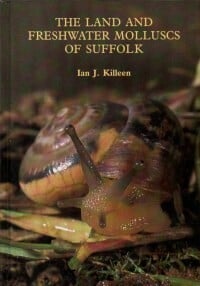
The Land and Freshwater Molluscs of Suffolk: An atlas and history
Author: Ian Killeen
Published by Suffolk Naturalists’ Society, Ipswich, 1992
Full colour, hardback, 190 pp. ISBN 0-9508154-4-6
Size 210 × 148 mm (A5)
The book is the result of 11 years of survey work and research by Ian Killeen. It is the most extensive and detailed study yet undertaken of the Mollusca of any major English county and is essentially the work of one person. Some 26,000 new records have been collected, and the Suffolk Biological Records Centre has used its facilities to produce accurate distribution maps. In addition to the Atlas, the book includes sections on geology, climate, Suffolk mollusc habitats, and the history of molluscan studies in the County. The book features high-quality colour photographs of living snails and slugs.
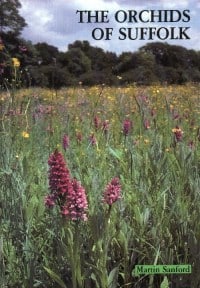
The Orchids of Suffolk: An atlas and history
Author: Martin Sanford
Published by Suffolk Naturalists’ Society, Ipswich, 1991
Full colour, hardback, 123 pp. ISBN 0-9508154-3-8
Size 210 × 148 mm (A5)
This hardback book is the culmination of over four years’ research and survey work by Martin Sanford of the Suffolk Biological Records Centre. Several thousand records, most supplied by amateur naturalists, have been analysed using sophisticated computer programs and used to plot accurate distribution maps. High-quality colour photographs of each species, with accompanying notes, make the book a useful identification guide. There are introductory sections on ecology, variation, habitats and conservation, and a special feature ‘Suffolk orchids, half a century of change’ by Francis Simpson, author of Simpson’s Flora of Suffolk.
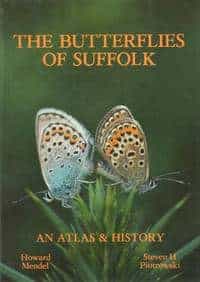
The Butterflies of Suffolk: An Atlas and History
Authors: Howard Mendel & Steve Piotrowski
Published by Suffolk Naturalists’ Society, Ipswich, 1986
Full colour, hardback, 128 pp.
ISBN 0-9508154-1-1
Size 210 × 148 mm (A5)
This definitive guide to the County’s butterflies, past and present, is based on the results of the Suffolk Butterfly Survey 1983-1985 and includes maps of all the species still to be found in the County. High-quality colour photographs of each species, taken by local naturalists who helped with the survey, make the book a useful identification guide. The authors, two well-known naturalists and conservationists, have drawn on a wealth of historical information to show the changes that have happened to Suffolk’s butterfly populations.