
Grants
Suffolk Naturalists’ Society has received generous donations from benefactors in the past. It now uses these funds to support SNS members’ studies of the county’s flora, fauna, and geology.
Amateur naturalists have long led efforts to expand knowledge and document Suffolk’s natural history. The records they create help monitor the changing fortunes of Suffolk wildlife and its habitats. The Suffolk Biodiversity Information Service (SBIS), based at the Hold in Ipswich, collates these records, which play a vital role in protecting wildlife. Local authority planning departments, ecological consultancies, land developers, researchers, conservation agencies, and others refer to them.
We aim to help those who feel the cost of a study is a barrier, whether experts or beginners, by encouraging exploration of understudied areas of the natural world and explaining the importance of this knowledge to the general public.
Applications are welcome for sums up to £1,000. However, larger or longer-running projects may be eligible for grants exceeding £1,000; please contact SNS for further information.
If an application is successful, SNS will award half the grant at the start of the study, with the remainder upon completion. Discretionary interim payments may be made if appropriate.
Activities eligible for funding include:
- Scientific equipment, books, software, or other relevant items.
- Reasonable travel and subsistence for fieldwork.
- Attending training courses, conferences, specialist meetings and visits to scientific institutions.
- Running workshops or field meetings that encourage people to get involved with wildlife studies and recording.
- Payment for expert guidance and acquiring the necessary licences.
Applications can be made at any time and will be considered as soon as possible. However, please allow plenty of time if the start date is essential.
The award is made entirely at the discretion of this committee, and each application is considered on its merits.
Criteria
Projects should include a large element of original work and further the knowledge of Suffolk’s flora, fauna or geology.
- A written account of the project is required within 12 months, unless the study is over a longer period. This should be in a form suitable for publication in one of the Society’s journals: Suffolk Natural History, Suffolk Birds or White Admiral, and a presentation to members at a meeting would be welcome.
- Suffolk Naturalists’ Society should be acknowledged in all publicity associated with the project and in any publications emanating from the project.
- Applicants must agree to comply with all relevant legislation and sound practices (including health and safety), and have the necessary licences and consents from landowners and tenants, such as English Nature, Local Authorities and any other interested parties and provide evidence of this.
- Applicants must not breach any copyright.
- If the project is being co-funded by another organisation, the part of SNS’s contribution being used must be made clear.
- Larger items of equipment applied for may be considered as a “loan”, and many need to be returned to SNS. This will be negotiated on an individual basis.
How to Apply
There are two ways to apply for a grant
- You can fill in the online application form using the button on the left.
- If you prefer to fill in a paper copy, please contact us for a form.
Benefactors
- Claude Morley, founder of SNS in 1929 (Insects).
- H.E. “Chip” Chipperfield, Honorary Treasurer from the mid-1950s to the mid-1980s (Butterflies and Moths).
- Lord “Jock” Cranbrook, father of Lord Gathorne Cranbrook – the Society’s Patron (Mammals, Birds and Molluscs).
- Mrs Frances Rivis, a botanist and plant collector, left her house and land to the Society (Flora).
- Francis Simpson, expert botanist and SNS Botanical Recorder (Botanical studies).
- Alan Hubbard, the Society’s Diptera Recorder from 1993 to 2000 (Invertebrate studies).
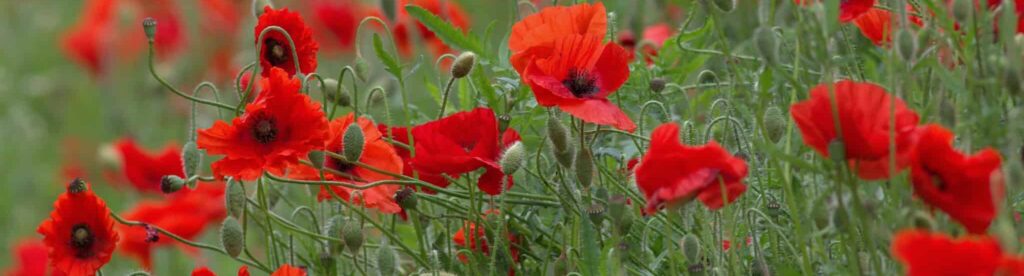
Page image: Poppies, Papaver rhoeas © Neil Rolph